Here is a beginner telescope for $US 59.95, with free shipping in the USA. It is by Orion. I have one of their telescopes and it works well for me.
Good Move, NASA!

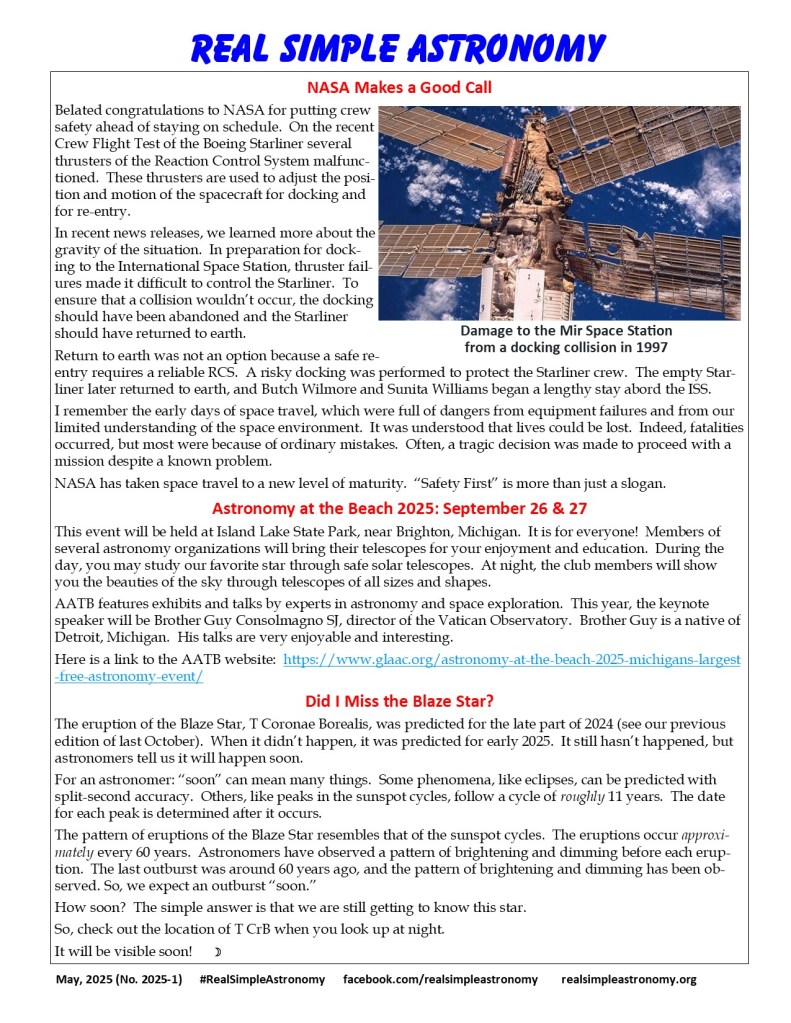
(Plain Text Version)
NASA Makes a Good Call
Belated congratulations to NASA for putting crew safety ahead of staying on schedule. On the recent Crew Flight Test of the Boeing Starliner several thrusters of the Reaction Control System malfunctioned. These thrusters are used to adjust the position and motion of the spacecraft for docking and for re-entry.
In recent news releases, we learned more about the gravity of the situation. In preparation for docking to the International Space Station, thruster failures made it difficult to control the Starliner. To ensure that a collision wouldn’t occur, the docking should have been abandoned and the Starliner should have returned to earth.
Return to earth was not an option because a safe re-entry requires a reliable RCS. A risky docking was performed to protect the Starliner crew. The empty Starliner later returned to earth, and Butch Wilmore and Sunita Williams began a lengthy stay abord the ISS.
I remember the early days of space travel, which were full of dangers from equipment failures and from our limited understanding of the space environment. It was understood that lives could be lost. Indeed, fatalities occurred, but most were because of ordinary mistakes. Often, a tragic decision was made to proceed with a mission despite a known problem.
NASA has taken space travel to a new level of maturity. “Safety First” is more than just a slogan.
Astronomy at the Beach 2025: September 26 & 27
This event will be held at Island Lake State Park, near Brighton, Michigan. It is for everyone! Members of several astronomy organizations will bring their telescopes for your enjoyment and education. During the day, you may study our favorite star through safe solar telescopes. At night, the club members will show you the beauties of the sky through telescopes of all sizes and shapes.
AATB features exhibits and talks by experts in astronomy and space exploration. This year, the keynote speaker will be Brother Guy Consolmagno SJ, director of the Vatican Observatory. Brother Guy is a native of Detroit, Michigan. His talks are very enjoyable and interesting.
Here is a link to the AATB website: https://www.glaac.org/astronomy-at-the-beach-2025-michigans-largest-free-astronomy-event/
Did I Miss the Blaze Star?
The eruption of the Blaze Star, T Coronae Borealis, was predicted for the late part of 2024 (see our previous edition of last October). When it didn’t happen, it was predicted for early 2025. It still hasn’t happened, but astronomers tell us it will happen soon.
For an astronomer: “soon” can mean many things. Some phenomena, like eclipses, can be predicted with split-second accuracy. Others, like peaks in the sunspot cycles, follow a cycle of roughly 11 years. The date for each peak is determined after it occurs.
The pattern of eruptions of the Blaze Star resembles that of the sunspot cycles. The eruptions occur approximately every 60 years. Astronomers have observed a pattern of brightening and dimming before each eruption. The last outburst was around 60 years ago, and the pattern of brightening and dimming has been observed. So, we expect an outburst “soon.”
How soon? The simple answer is that we are still getting to know this star.
So, check out the location of T CrB when you look up at night.
It will be visible soon!
#RealSimpleAstronomy
My “Other Blog”

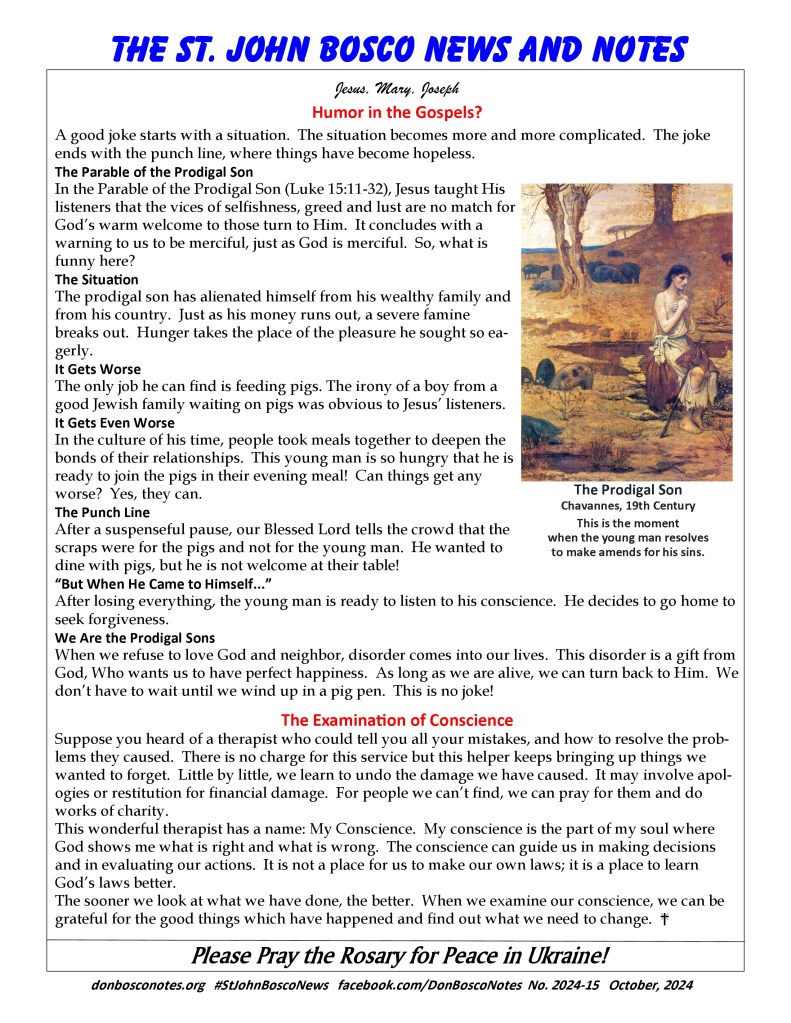
I would like to share a recent edition of my other blog, called “St. John Bosco News and Notes.” If you would like to see more editions, there are links to my website and to my Facebook page at the end of the page. For Instagram and Twitter-X, use: #StJohnBoscoNews.
May God be with you!
Let’s Say “No” to Space Junk
In the process of creating innovative space missions, we have created an environmental disaster consisting of spent rockets, derelict satellites, and debris. I have provided some links to articles on the problem and proposed solutions. I would like to sound off a bit from my own viewpoint:
We are holding onto two faulty notions: 1. Space is so vast that there is negligible risk of harmful interactions. 2. We are keeping track of large items so that we can avoid them. These notions are still invoked, despite the collision of two satellites in 2009.
We are accepting the unacceptable. It seems that we have not yet had a sufficiently serious incident. So far, no one has died from a space junk collision. The International Space Station needs to conduct an avoidance maneuver once a year on the average. Despite this, a hole has been discovered in one of its solar panels. Perhaps we should postpone crewed missions until we can provide a safer environment.
We need to stop leaving unused satellites in orbit. Every satellite should have a very reliable system (or multiple systems) to ensure that it can be deorbited when needed. These systems must able to work even if the main systems fail. If the deorbit system fails, the owner would need to pay for a retrieval mission.
We need to begin to collect hazardous fragments from orbit. This will require technologies which don’t exist at this time. The thousands of cataloged objects vary in their potential for damage, and in the longevity of their orbits. The ones with the greatest potential to do harm should be the object of our first efforts.
To summarize, we need to stop creating space junk, and we need to clean up what is already out there. We may never achieve perfection in either goal, but we need to get serious about keeping space clean and safe.
Keep lookin’ up!
John
(I hope that the tone of this essay isn’t too harsh. It is much milder than my earlier drafts!)
“There is a Lot of Empty Space..”
The Kessler Syndrome (When Debris Get Out of Control)
“Did Pluto Disappear?”

“Did Pluto Disappear?”
This is an exact quote, from a young student at a star party. When I heard this question, I realized that the new definition of a planet has created confusion for students.
In 2006, the International Astronomical Union adopted a new definition of a planet. It requires that the body be large enough that it naturally assumes a spherical shape, and it requires that the body be large enough to “clear the neighborhood around its orbit.” Pluto does have the spherical shape, but it hasn’t “cleared the neighborhood around its orbit.” Therefore, Pluto was designated as a “Dwarf Planet”, rather than a “Planet”.
A new proposal by Kirby Runyon is the extreme opposite of that of the IAU. Runyon’s definition requires only that the body have a spherical shape. It doesn’t matter what kind of orbit it follows. This would mean that moons would called planets, if they are spherical. This would raise our list of planets to over 100 members!
My proposal is to define a planet to be any object orbiting the Sun, which is known to have a spherical shape. Other objects, such as asteroids and comets, are not spherical, and would not be called planets. There are several large objects, such as Eris, Haumea and Makemake, which are too distant for their shapes to be determined. Until better observations are made, these objects would not be listed as planets.
How big would the new list be? Only ten planets for now!
Here is the proposed list, in order of distance from the Sun:
Venus
Earth
Mars
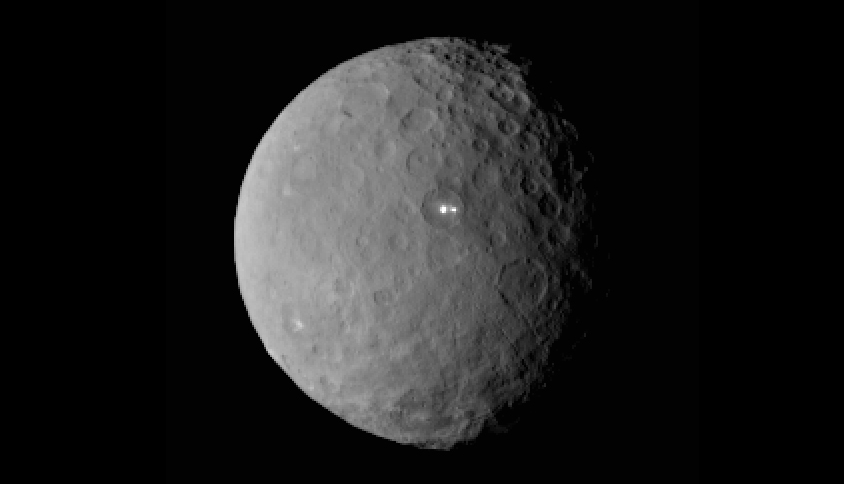
Ceres
Jupiter
Saturn
Uranus
Neptune
Pluto
Note that our old friend Pluto is back on the list. Also, a new member, Ceres, has been added. Since most people have never heard of Ceres, the new list should encourage people to learn something about this planet.
This method of defining the word “planet” may never make it to the text books, but it was fun putting it together!
As always, keep looking up!
John
For more information on the planet Ceres:
Your First Telescope

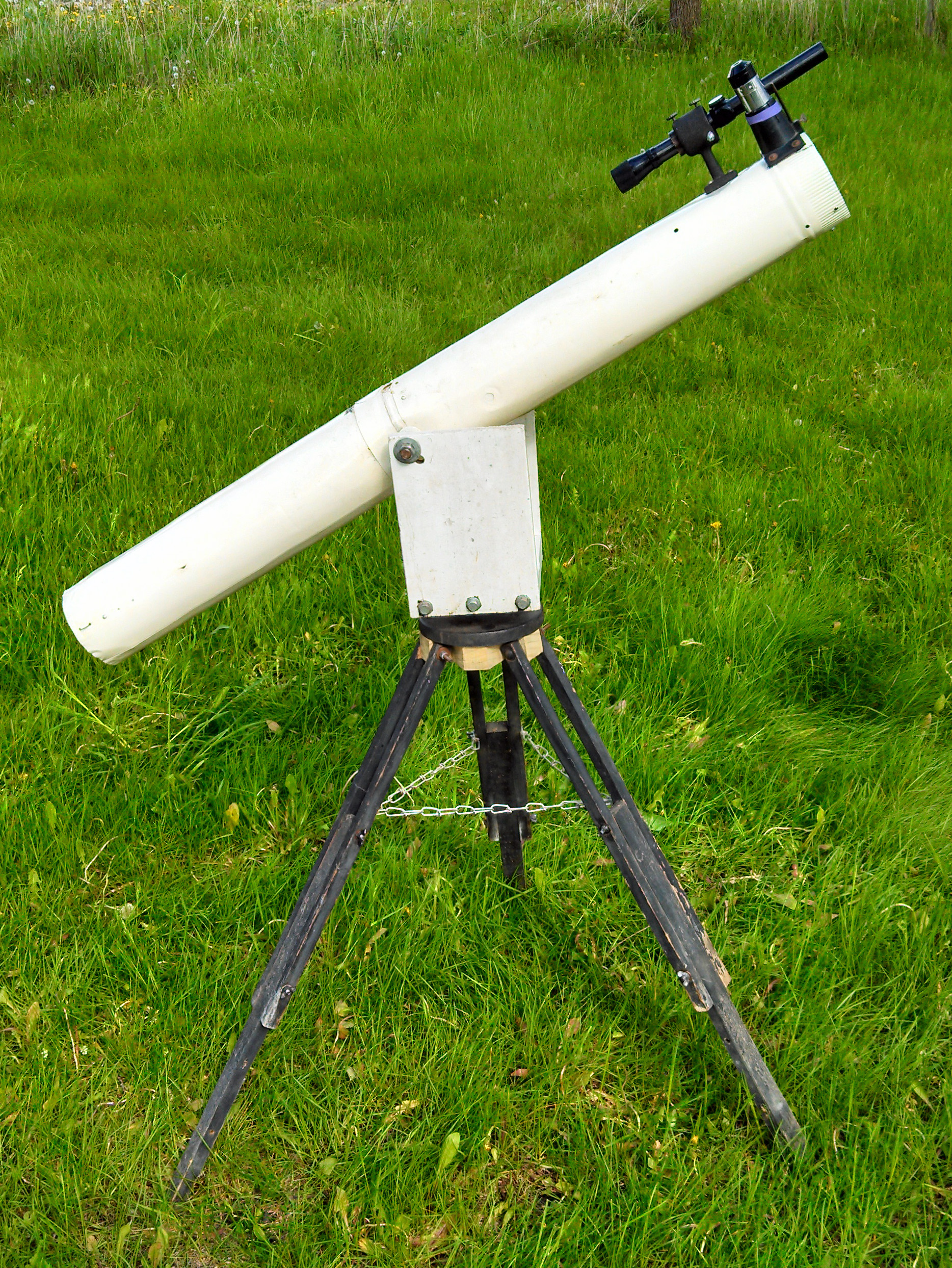
As wonderful as the night sky appears to the naked eye, there is much more to see with the aid of a telescope. If you are like most amateur astronomers, you spend a lot of time thinking about telescopes.
For most people, the challenge is to get the best telescope for the available money.
Rather than tell you how to pick out a telescope, I have included links to some very informative articles. I will just add a few thoughts to consider:
- If you can get to a star party, the telescope owners will be glad to show how their instruments work. They will help you to learn the advantages and disadvantages of the various choices.
- Your local public library may be lending telescopes. This is a new idea which is working well for many libraries. These telescopes are usually in the very-low price category, but they will help you to learn how to use a telescope.
- Binoculars are very useful because of their ease of use and their wide fields of view. Even low-priced binoculars can give you a good view of the Moon, the planets and star clusters.
- Stay away from sellers who emphasize the magnification which their telescopes provide. Depending on the eyepiece selection, any telescope can produce 300, 400, or 500 power. This level of magnification is useless for many reasons. Even the finest telescopes are used at 50 to 100 power. For special close-ups, 200 power may be used occasionally.
- Some manufacturers of low priced telescopes of good quality: Celestron, Meade, Orion, Sky Watcher.
- If you want to do astroimaging, consider doing it with your second telescope. Scopes suitable for imaging are much more expensive than ones for visual use. In addition, astroimaging requires many skills and much patience. For your first telescope, choose one that is easy to set up, and enjoy visual astronomy for a while. Later, you will be able to make a better choice for your imaging scope.
Think about size, weight and ease of setup when making your selection. When the Sun goes down, your energy level may be declining. If the telescope is hard to set up, you may be tempted to stay indoors! If you want to carry it in your car, will it actually fit?
Enjoy your search for a telescope, and keep looking up!
John
http://www.skyandtelescope.com/astronomy-news/types-of-telescopes/
http://www.skyandtelescope.com/astronomy-equipment/telescope-buying-guide/
http://www.space.com/15693-telescopes-beginners-telescope-reviews-buying-guide.html
http://www.astronomy.com/-/media/Files/PDF/Buying%20Your%20First%20Telescope.pdf
Seven “Earth-Like” Planets?
We are living in an exciting time for the exploration of our cosmic neighborhood. Startling discoveries hardly seem to startle us. For example, the discovery and study of exoplanets (planets orbiting stars other than our Sun) was unknown two decades ago. Now, thousands have been discovered.
This week, there was an announcement that a group of seven “Earth Sized” planets were discovered in orbit around a nearby star. This is certainly an advance in our knowledge of the universe. Unfortunately, many media outlets have written headlines describing them as “Earth Like”. This is highly misleading, because the temperatures, compositions, and radiation levels of these bodies are unknown. (Even the New York Times, which has a reputation for accuracy, suggested: “Scientists could even discover compelling evidence for aliens.”)
It is part of our human nature to want to have answers to all our questions. We would love to have detailed descriptions of the seven new exoplanets, but patience is a must! In the coming years, better observations will likely help us to learn more about these worlds. The new discoveries may or may not be exciting. At each of these junctures, we can expect to hear exaggerated reports in the popular media.
So, try not to get too excited when listening to the news. Enjoy the latest discoveries, but go to a reliable source to find out what has actually been discovered!
Let’s Explore Mars, But Not With People! – Part 2, Cost and Value

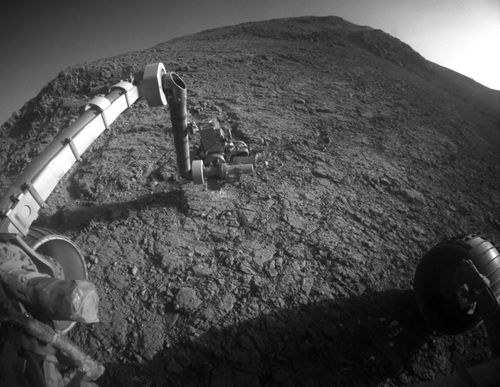
Cost
To estimate the cost to travel to Mars, it is necessary to identify what needs to be shipped to Mars, what kinds of spacecraft need be built, and what kind of difficulties may arise. Since we cannot easily answer these questions, we can only make a vague guess as to the cost of the program.
Some high-expense items to consider would be:
- The spacecraft may need to be large and complex, to provide the ability to recover from a major malfunction.
- Because of the distance to Mars and the infrequency of launch windows, critical items will need to be stockpiled there. This will be expensive, and many items will never be used. This is part of the cost of taking safety seriously.
- Extra launches may be needed to deal with emergencies. The hardware for these missions would need to be built and ready ahead of time.
To raise the funds for a venture this big, the governments of several countries will need to work together. Each of these participating nations well need to make a firm commitment to staying with the program for many years. Unfortunately, the politics of many countries works against long term participation.
In a democratic country, the voting public would need to be willing to pay high taxes for a long time. They would need to keep paying, even with the inevitable cost overruns. It is doubtful that this would happen.
Currently, in the USA, funding for robotic missions does not come automatically. Each mission must be justified to obtain funding. Given this difficulty, it is difficult to expect that human travel to Mars would be approved.
All of this leads to the third topic:
Value
I won’t dispute the fact that human explorers would be able to do things which robots cannot do. People have intuition, which will enable discoveries which are not anticipated. People can make repairs to equipment, which would be awkward or impossible to do otherwise. People observe on a deeper level than mere instruments. When something new or unusual is found, the human observer wants to understand it, and immediately examines it in detail.
In discussing value, we try to predict what we will accomplish, and decide if it worth the cost. Currently, robotic missions are steadily building up our understanding of Mars. No doubt, more will be launched during the next decade. Eventually, they will bring samples of Martian soil back to Earth.
For the cost of a single human mission, many robotic missions could be launched. These devices would not need to be identical, but could incorporate the lessons from previous successes and failures.
After Mars has been well examined by robots, human exploration could begin. Then human beings could begin to do what machines can’t do. Today, we don’t know what that necessarily human contribution would be.
So, the good news is that we are already exploring Mars in a logical, progressive, and affordable manner!
Next week, I will ask you how your plans for 8/21/17 are coming along!
Let’s Explore Mars – But Not With People! – Part 1, Safety

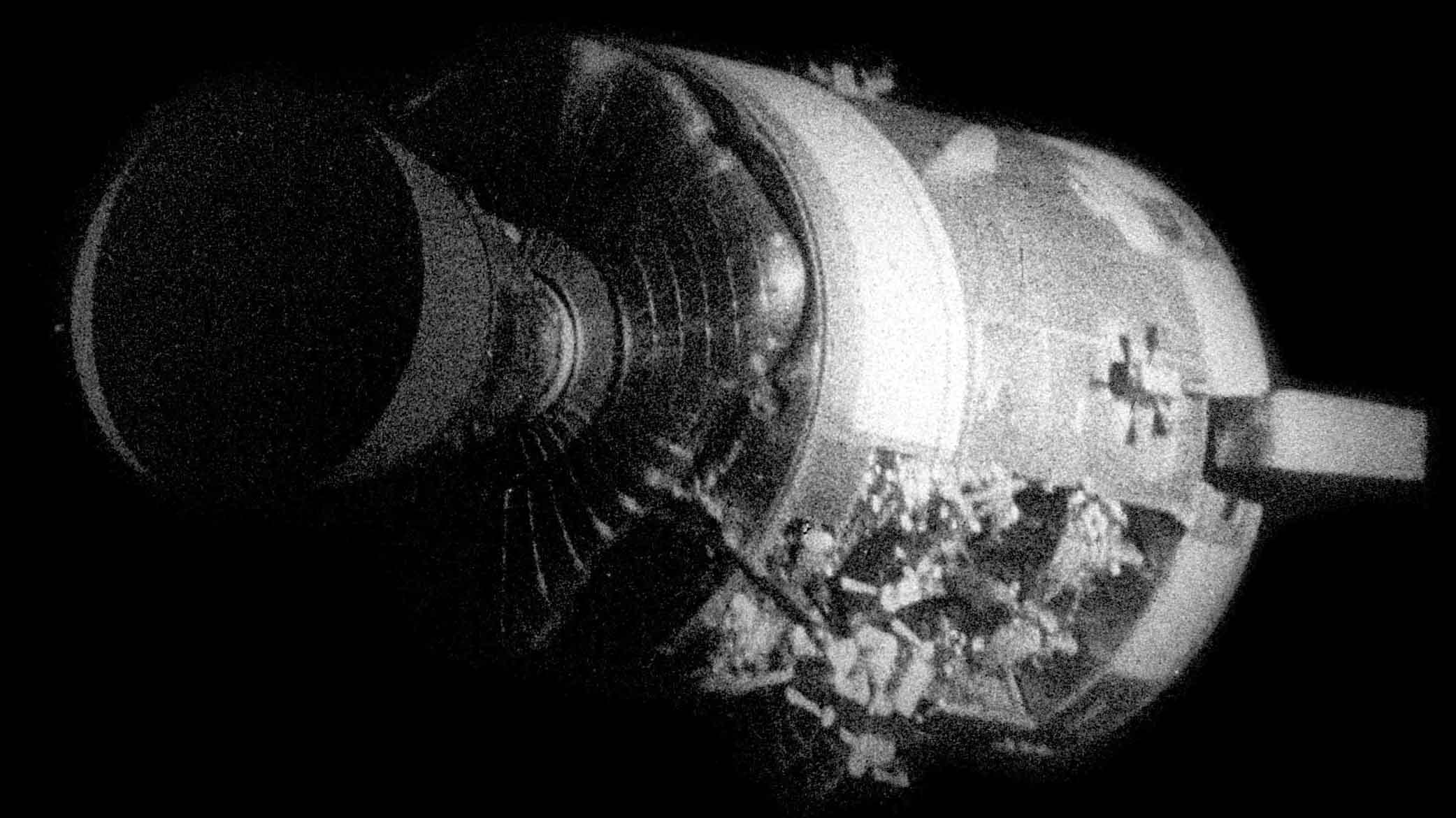
Part 1 – Safety
Honestly, I am not having a bad day, and I love space exploration. I am very enthusiastic about exploring Mars. I am amazed at how well some of the robotic craft have performed.
I would like to see larger numbers of roving vehicles traveling the rocky red paths of Mars. I do not think, however, that we are ready to think seriously about human travel to Mars. Also, I don’t take it as a certainty that it will happen “someday in the future”. Here are my reasons: safety, cost, and value.
Safety
I have seen sketches of proposed missions for travel to Mars, and I think that they would have some chance of getting our people to Mars and back home safely. The problem is that they assume that everything will go reasonably well. We have learned a lot about building reliability into our spacecraft, but we have had the option of returning quickly to Earth if malfunctions became too great to handle.
A craft en route to Mars will need the capability of managing and recovering from a major problem. What kind of problem? Since the flight of Yuri Gagarin, we have had fires, a burst oxygen tank, rocket motors which failed to run when needed, attitude thrusters not shutting off, a loss of hull pressure from a docking mishap, failures of modules to undock, release of toxic gas into a crew compartment, and several types of space suit malfunctions.
The Mars spacecraft will need to have extensive countermeasures and backup systems. Even so, to have a high level of safety, it may be necessary to travel in tandem with a complete redundant spacecraft, with a means of getting from one to the other quickly.
Although there may be astronauts willing to take a great risk, I would not wish to put them in danger by paying for a mission which doesn’t have an excellent prospect for success.
In addition to the difficulty of building a robust spacecraft, the problem of radiation must be addressed. When a vehicle moves outside of low-Earth orbit, radiation becomes a serious concern. There is a constant stream of high-energy particles in space. During a solar flare, it becomes much more intense. We have only begun to learn how to provide effective shielding to protect the crew.
Thank you for bearing with my somber treatment of such an exciting topic as space exploration. I promise to wrap up this series with some very encouraging ideas!
Coming: Cost and Value
 Real Simple Astronomy