
Cost
To estimate the cost to travel to Mars, it is necessary to identify what needs to be shipped to Mars, what kinds of spacecraft need be built, and what kind of difficulties may arise. Since we cannot easily answer these questions, we can only make a vague guess as to the cost of the program.
Some high-expense items to consider would be:
- The spacecraft may need to be large and complex, to provide the ability to recover from a major malfunction.
- Because of the distance to Mars and the infrequency of launch windows, critical items will need to be stockpiled there. This will be expensive, and many items will never be used. This is part of the cost of taking safety seriously.
- Extra launches may be needed to deal with emergencies. The hardware for these missions would need to be built and ready ahead of time.
To raise the funds for a venture this big, the governments of several countries will need to work together. Each of these participating nations well need to make a firm commitment to staying with the program for many years. Unfortunately, the politics of many countries works against long term participation.
In a democratic country, the voting public would need to be willing to pay high taxes for a long time. They would need to keep paying, even with the inevitable cost overruns. It is doubtful that this would happen.
Currently, in the USA, funding for robotic missions does not come automatically. Each mission must be justified to obtain funding. Given this difficulty, it is difficult to expect that human travel to Mars would be approved.
All of this leads to the third topic:
Value
I won’t dispute the fact that human explorers would be able to do things which robots cannot do. People have intuition, which will enable discoveries which are not anticipated. People can make repairs to equipment, which would be awkward or impossible to do otherwise. People observe on a deeper level than mere instruments. When something new or unusual is found, the human observer wants to understand it, and immediately examines it in detail.
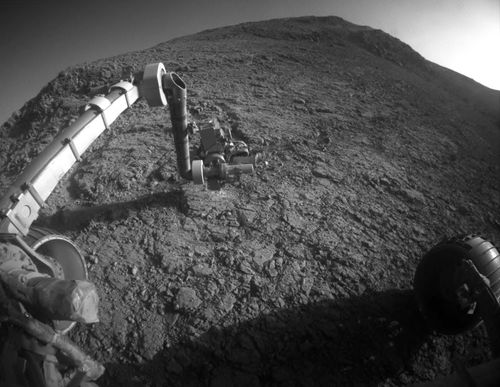
In discussing value, we try to predict what we will accomplish, and decide if it worth the cost. Currently, robotic missions are steadily building up our understanding of Mars. No doubt, more will be launched during the next decade. Eventually, they will bring samples of Martian soil back to Earth.
For the cost of a single human mission, many robotic missions could be launched. These devices would not need to be identical, but could incorporate the lessons from previous successes and failures.
After Mars has been well examined by robots, human exploration could begin. Then human beings could begin to do what machines can’t do. Today, we don’t know what that necessarily human contribution would be.
So, the good news is that we are already exploring Mars in a logical, progressive, and affordable manner!
Next week, I will ask you how your plans for 8/21/17 are coming along!


This is very interesting, thorough and well written.
LikeLike